The Ashby Workshops: 2026 Report
Events
•
Research
•
Mar 5, 2026
Designing Our Collective AI Future: Insights from the leaders shaping the future of AI across sectors and disciplines
Key Summary
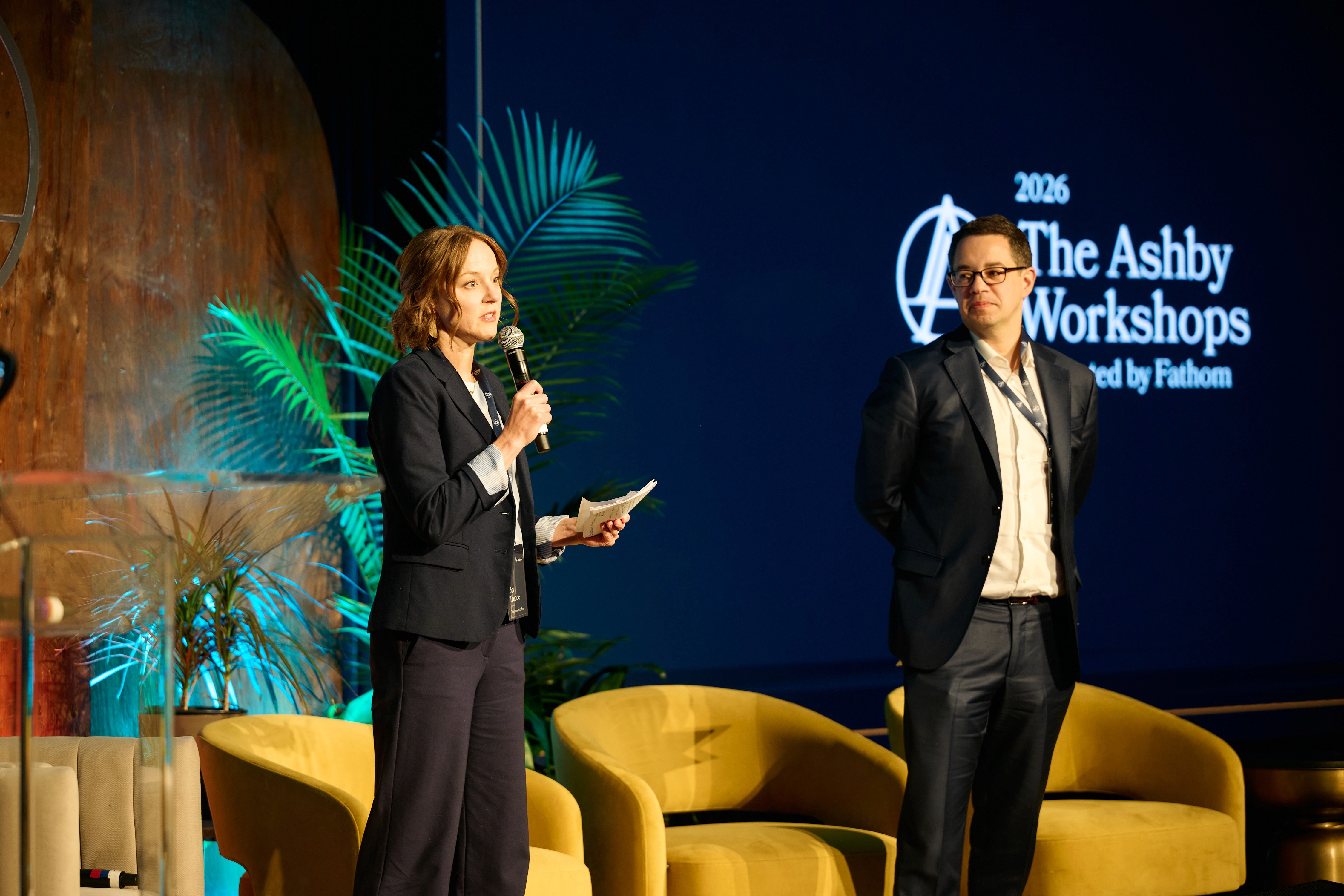
There is now broad recognition among those shaping AI that the time for admiring problems has come and gone. The 2026 Ashby Workshops brought together policymakers, technologists, enterprise leaders, faith communities, labor advocates, and national security experts for three days of facilitated conversation, scenario exercises, and tabletop simulations. This brief captures the sharpest moments from the conference and the common threads that emerged across them.
The Conference
“I think we could do more to convey to the public the inside view of how crazy fast this feels.”
In a rare panel with national security experts from Anthropic, OpenAI, and Google DeepMind, representatives from three frontier labs converged on a striking meta-challenge: even the people building these systems struggle to communicate the pace of change to policymakers and the public—and without that understanding, the political mandate to build governance will be slower to arrive.
Bipartisan collegiality, fundamental disagreement. Former White House AI officials from the Biden and Trump administrations agreed on the stakes but remained split on risk tolerance. One argued the evidence for continued AI progress justified proactive measures like export controls. The other countered that policy should remain flexible across multiple technical futures. The divide wasn’t performative—it was a genuine disagreement about whether America's advantage comes from controlling or diffusing AI capabilities.
“Worker anxiety is through the roof.” The workforce panel surfaced tension between what economists predict and what policymakers can act on. One panelist’s suggestion—that we should prepare for scenarios where AI becomes a really good substitute for human workers—was met with visible discomfort. Anthropic shared that 100% of its coding is now done with Claude, up from 40–60% just five months prior. Yet organizations aren’t seeing expected ROI, because transformation requires genuine change management, not just technology deployment.
The fraud workshop revealed a crisis hiding in plain sight. AI-powered fraud already costs hundreds of billions domestically, and the classic safeguards—being tech savvy or aware and educated about fraud—no longer protect against scammers who can convincingly replicate a loved one’s voice. As one participant put it, there is now “a scam for everybody.” Participants agreed on the urgent need for new identity verification systems, cross-sector data sharing, and systemic interventions at high-risk moments.
The US-China simulation surfaced a counterintuitive insight. Participants role-playing bilateral AI negotiations discovered that moments of American technological advantage may paradoxically be the best opportunities for diplomacy—because they create conditions under which China has the most to gain from coming to the table. They also found it impossible to negotiate externally without a unified domestic AI vision first.
Economic disruption is not just a policy problem but a philosophical one. Asked to respond to a scenario in which AI can effectively replace every job by 2030, participants arrived thinking about programs—unemployment insurance, UBI, retraining—and left questioning what human participation in the economy is actually for. That shift in framing may itself be the most important insight from the exercise.
The children’s safety workshop left with an uncomfortable conclusion. Participants designed an independent body to rate AI products for children—inclusive, apolitical, with access to proprietary data. But the harder conclusion came at the end: the most dangerous AI interactions children will have are the ones no rating system will anticipate and no regulator will see in time. Governance alone cannot close this gap.
What Emerged & What Comes Next
The bottleneck has shifted from technology to institutions
The limiting factor in responsible AI deployment is no longer what the technology can do—it’s whether existing institutions can govern it at the speed it demands.
Build independent verification infrastructure. IVOs offer a concrete framework to create trust without stifling innovation.
Trust is the single most important factor in determining whether AI leads to progress or greater uncertainty—and the infrastructure to build it does not yet exist
AI lacks the evaluation systems every other high-stakes industry has built. Where verification is absent, deployment stalls.
Treat child safety and fraud prevention as immediate priorities. These are areas of genuine bipartisan agreement where concrete harms demand action now.
Workforce disruption was the most unsettling conversation in the room—and no one agrees on what’s coming
Unemployment insurance assumes temporary displacement. Educational pipelines prepare students for jobs that may not exist. Reskilling programs can’t target skills that AI may absorb by the time training is complete.
Prepare workers and institutions in parallel. Build safety nets that scale with technological change rather than waiting for consensus on timelines.
Early choices are shaping the long-term trajectory—and delay is itself a choice with consequences
Model release norms, verification standards, and deployment decisions are being set now—whether intentionally or by default.
Direct resources toward high-impact public benefits and create legal protections for safety research. Market forces alone won’t prioritize breakthrough applications in healthcare and scientific discovery, and researchers need safe harbors to do the testing that accountability requires.
The question of what AI should be for kept surfacing—and it doesn’t have a technical answer
Across sessions—from faith leaders to educators to healthcare providers—the recurring question was not whether AI systems work, but whether they support human flourishing.
Reframe success metrics. Measure not just capabilities but real-world impacts on agency, creativity, relationships, and meaning.
The 2026 Ashby Workshops were held under Chatham House Rule. Quotes included here reflect only those shared with explicit consent.